I reviewed dozens of food memoirs and cookbooks from 2006 to 2010 on Gastronomy. I couldn’t get enough of Bourdain and Reichl, of course, but also had the time and interest to read more niche topics like the “war” over foie gras, America’s hyper-competitive cooking circuit, and why French women don’t get fat — diet culture was wild in the early aughts.
It’s hard to pinpoint when I stopped reading food-related titles for pleasure, but as my nine-to-fives increasingly centered around food and restaurants, I gravitated less toward those topics in my free time.
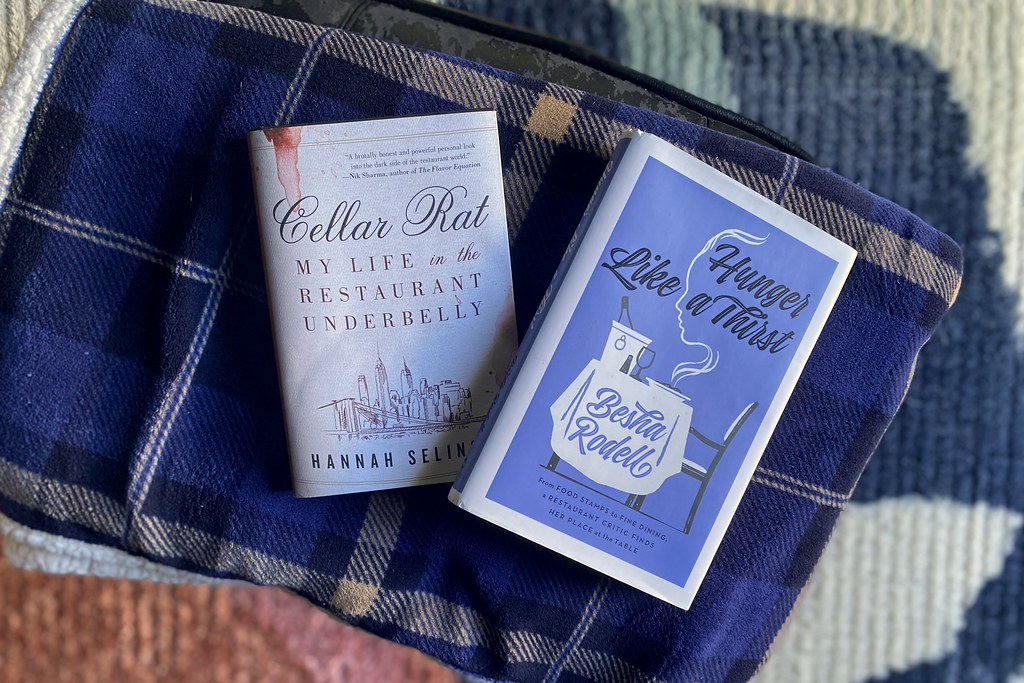
Recently, though, I’ve been reaching for food memoirs again. The excitement I felt turning the pages of Hunger Like a Thirst by Besha Rodell (2025) and Hannah Selinger’s Cellar Rat (2026) was reminiscent of discovering the genre two decades ago.
While the books offer two very different perspectives — Rodell writes from the viewpoint of a seasoned restaurant critic, while Selinger shares her journey as a New York City sommelier — both successfully pulled me deep into their worlds and resparked my interest in the genre.
There was much to take away from Hunger Like a Thirst. Rodell’s honest reflection on what it was like to fill Jonathan Gold’s legendary shoes as the LA Weekly restaurant critic has stayed with me long after closing the book. I also deeply admired her transparency about navigating financial strain and personal security throughout her career. Her story is a reminder that in journalism, success rarely equates to monetary reward or stability — even at the highest levels. Still, Rodell never questions her path.
Cellar Rat read like a who’s who of the New York City dining scene in the early aughts. Selinger’s career took her through highly coveted dining rooms — from Bobby Flay’s Bar Americain and David Chang’s Momofuku empire to the four-star fine dining temple Jean-Georges and more — while exposing the abusive cultures that pervaded them. Selinger reveals how a tumultuous relationship with her stepfather primed her for the crossed boundaries of her restaurant career. She ultimately concludes that restaurant culture hasn’t improved much since her decade-long stint in its underbelly. What a fucking shame.
Together, these two books reminded me why I fell in love with food memoirs in the first place: they are never just about the food, but about the complex human lives behind the computer screen and in the wine cellar.
Oh, and I’ll never eat a MilkBar dessert ever again.