Sep 2007

Nhà Hàng Phố Hội – Hoi An

IMG_4260

August 26, 2007
Cuisine: Vietnamese

69 Phan Chu Trinh
Hoi An, Vietnam

Phone: unknown
Website: none

IMG_4264

Wonton Dumplings

IMG_4267

Cao Lầu

IMG_4271

Chicken with Bamboo Shoots

IMG_4270

Sauteed Octopus with Onions, Scallions, and Tomatoes

IMG_4272

Crispy Fish

IMG_4268

Water Spinach Soup

IMG_4273

Banh Gai – Sweet Black Tapioca with Mung Beans

For our final dinner on the retreat, the staff headed to an eatery in the town of Hoi An called Pho Hoi. Our group was half an hour late for our reservation and by the time we arrived at the restaurant, our food was sitting on the tables getting cold. This was not an auspicious start. The meal was decent, but more or less unspectacular compared to the seriously good eats we’d been treated to earlier. I was considering not blogging about Pho Hoi at all, but there was one special dish that deserved some press—Cao Lu.

Hoi An is known for Cao Lầu and every restaurant in town serves up their own version. In a country chock full of broth and noodle entrees, Cao Lầu is a real standout, especially for its unique noodles.

Rumor has it, Cao Lầu noodles can only be made with water from a specific well in Hoi An called Ba Le, which explains why I’ve never encountered this dish until now. The noodles are nothing short of stellar—they’re wheat-y, thick, and have some bite to them. The Cao Lầu is topped with shrimp and pork and garnished with mint, basil, bean sprouts and lettuce. A light soy sauce broth finishes the dish off.

Whereas most people visit Hoi An to get custom made clothes for cheap, Cao Lầu is what draws me to the town.

Sep 2007

Vietnam Village Resort – Khu Du Lịch Làng Quê

Staff retreats stateside and in Vietnam have two things in common—ridiculous amounts of food and not so much productivity.

On the road from Da Nang to Hoi An, the site of the retreat, the entire East Meets West staff (80+ people) stopped at the Vietnam Village Resort for a cultural experience and lunch.

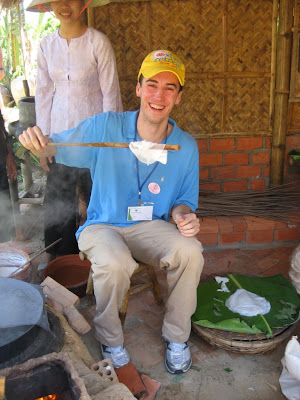
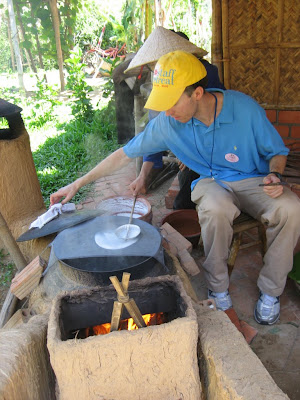
The Vietnam Village Resort is a Vietnamese version of Colonial Williamsburg, but instead of observing butter churning demonstrations and visiting the shoemaker, we saw silk being spun from cocoons (!) and learned the art of making banh chung. Although I usually shun tourist traps, the exhibits were so interesting that I couldn’t help being a fan. I was particularly fascinated by the sugaring demo, which transformed sugar cane into raw sugar. The Astronomer had a more hands-on experience and learned how to make banh cuon. We had a blast.

After perusing the food and craft stalls for an hour or so, we sat down for a multi-course lunch prepared by the Village staff. We started off with three appetizers: banh dap, banh beo, and banh nam.

IMG_4203

This was my first time trying banh dap, which is banh cuon (tender rice flour crepes) laid atop a crispy rice cracker, broken in half, and eaten with fish sauce. Dap means to hit/slap in Vietnamese, which is what one does to break the banh in half. I found banh dap a little bland, but enjoyed the texture. A little Internet research has revealed that some versions of banh dap are made with scallions and meats; I’m sure those preparations are much more desirable.

IMG_4208

The banh beo was very unique in that it was portioned in a small dish, topped with a salty shrimp paste, and eaten with a wooden stick. The banh beo I’m familiar with is arranged overlapping on a plate, topped with mung bean paste, sautéed scallions, dried shrimp, and sweet fish sauce, and eaten with chopsticks. The Village’s version was alright, but I prefer the one I’m used to.

IMG_4211

The banh nam was very well prepared; everything tastes better wrapped up in banana leaves!

IMG_4216

Next came an intermezzo course of my quang, which was far from amazing. The dish tasted like it was thrown together and the flavors didn’t meld at all. Preparing a meal for a large group is tough and the noodles really suffered as a result. Following the my quang, we enjoyed a number of dishes with rice.

IMG_4218

I didn’t have any of the chicken, but my table ate it up.

IMG_4221

The braised fish was wonderfully marinated and my favorite course of the afternoon.

IMG_4219

The water spinach and shrimp soup provided a good source of greens, but was nothing special.

IMG_4223

For dessert we were served sweet tofu in a ginger syrup, which rocked my world so much that I ate three bowls. There’s just something about the tofu’s delicate texture mixed with the sweet and spicy syrup that I clearly can’t resist.

Vietnam Village Resort (vnhomeland@dng.vnn.vn)
Cam Nam, Hoi An
Phone: 0510936089

Sep 2007

Vegetation Profile: Langsat

Langsat are ovoid, roundish orbs around five centimeters in diameter, usually found in clusters of two to thirty fruits. Each round fruit is covered by yellowish, thick, leathery skin. Underneath the skin, the fruit is divided into five or six slices of translucent, juicy flesh. The flesh is slightly acidic in taste, although ripe specimens are sweeter. Green, seeds are present in around half of the segments, usually taking up a small portion of the segment although some seeds take up the entire segment’s volume. In contrast with the sweet-sour flavor of the fruit’s flesh, the seeds are extremely bitter.

I recently discovered Langsat or trai bon bon at Cho Han (Han Market) in Da Nang. The vendor who I was buying guavas from insisted I try a langsat and began peeling one before I could say no thanks. I popped the fleshy fruit in my mouth and fell head over heels instantly. The langsat was ripe and simultaneously sweet and tart—sort of like a perfectly sweetened grapefruit. I bought a kilo for 25,000 VND and polished them off much too soon.