Oct 2011

GIVEAWAY: Cook’s Illustrated Cookbook

Cook's Illustrated Cookbook Giveaway

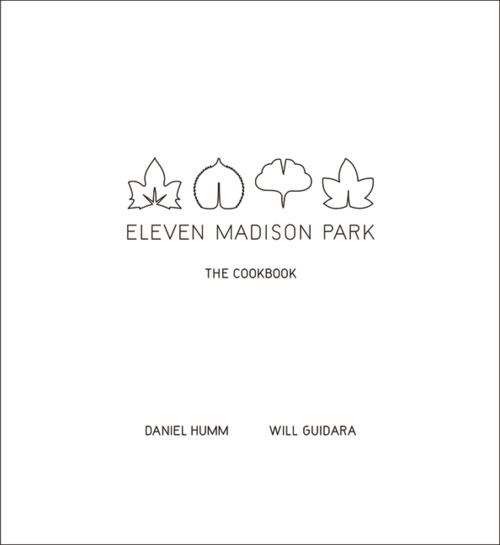
The Cook’s Illustrated Cookbook features 2,000 of the magazine’s greatest hits—hits that belong in the repertoire of any cook who cares about recipes that work. When Christopher Kimball launched Cook’s Illustrated in 1992, he envisioned a cooking magazine unlike any other—one where a mad-scientist approach to developing recipes would result in dishes that would never disappoint.  These recipes have now been gathered into a landmark cooking reference that spans appetizers, soups, salads, pasta, poultry, meat, yeasted breads, cookies, cakes, and much more.

In addition to foolproof recipes, the book highlights the test kitchen’s most ground-breaking work, such as why you should reach for a skillet rather than a wok when stir-frying; the best way to thaw meat; how to accurately test meat for doneness; why you should brine beans for best results; and more. With 2,000 recipes spanning every dish you’d ever want to make, the Cook’s Illustrated Cookbook will keep both novice and practiced cooks cooking for a lifetime and guarantees impeccable results.

“Cook’s Illustrated Cookbook” Giveaway

I have ONE copy of the Cook’s Illustrated Cookbook to give away to ONE gas•tron•o•my reader. To qualify for the giveaway, please leave a comment with your name and email address in the appropriate fields, and your answer to the following question: What is your favorite cookbook? For two more chances to win, follow me on Twitter (@GastronomyBlog) and/or on Facebook. Then, leave additional comments on this post to let me know.

I’ll be using a random number generator to choose the winner. All entries must be received by Friday, October 28, 2011 at midnight PST. Good luck! ** The contest is over. The winner is Kristin. Congrats! **

Oct 2011

Monkey Bread

Monkey Bread

Being married to a cinnamon lover means that I’m constantly on the lookout for both sweet and savory recipes that call for an abundance of the fragrant spice. When I stumbled upon Monkey Bread in this month’s Cooking Light, I immediately ran into the kitchen to see if I had all the ingredients on hand. After baking my share of snickerdoodles and cinnamon rolls, I was excited to try a cinnamon-laced sweet that was completely out of the ordinary.

Whereas traditional Monkey Bread is made from canned biscuits, this healthier version builds a base from scratch using a combination of all-purpose and whole wheat flours. Waiting for the dough to rise two times will test one’s will and patience, but the end result is certain to make it all worth while.

Monkey Bread is an indulgent marriage of sticky buns and doughnut holes. Served hot out of the oven, it’s a gooey, golden, and unabashedly sweet affair. While it may be civilized to eat it with a fork and knife, I prefer to monkey around with my fingers, pulling each nub apart, slowly and deliberately. Monkey Bread is the ultimate brunch time centerpiece.

  • 13 1/2 ounces all-purpose flour (about 3 cups)
  • 4 3/4 ounces whole-wheat flour (about 1 cup)
  • 1 teaspoon salt
  • 1 package quick-rise yeast (about 2 1/4 teaspoons)
  • 1 cup very warm fat-free milk (120° to 130°)
  • 1/4 cup very warm orange juice (120° to 130°)
  • 1/4 cup honey
  • 2 tablespoons butter, melted
  • Cooking spray
  • 1/2 cup granulated sugar
  • 1/2 cup packed brown sugar
  • 2 teaspoons ground cinnamon
  • 4 1/2 tablespoons fat-free milk, divided
  • 2 tablespoons butter, melted
  • 1/2 cup powdered sugar
  • 1 tablespoon 1/3-less-fat cream cheese
  • 1 teaspoon vanilla extract

Monkey Bread

Weigh or lightly spoon flours into dry measuring cups; level with a knife. Combine flours, salt, and yeast in the bowl of a stand mixer with dough hook attached; mix until combined. With mixer on, slowly add 1 cup milk, juice, honey, and 2 tablespoons butter; mix dough at medium speed 7 minutes or until smooth and elastic.

Monkey Bread

Place dough in a large bowl coated with cooking spray, turning to coat top. Cover and let rise in a warm place (85°), free from drafts, 1 hour or until doubled in size. (Gently press two fingers into dough. If indentation remains, the dough has risen enough.)

(more…)

Oct 2011

Hakata Ramen Shin Sen Gumi – Los Angeles (Downtown)

Shin Sen Gumi - Little Tokyo

Shin Sen Gumi opened a branch of their popular Hakata ramen shop in Little Tokyo while I was holidaying in Vietnam. I had heard rumblings from fellow ramen-goers that the noodles here were comparable to Daikokuya without the hour-long wait, so I rushed over just as soon as the jet lag wore off to taste them for myself.

This is the Shin Sen Gumi Group’s fourth Hakata ramen outlet in Los Angeles. The other three locations are in Gardena, Rosemead, and Fountain Valley.

Shin Sen Gumi - Little Tokyo

Shin Sen Gumi specializes in Hakata-style ramen from northwestern Kyushu. This type of ramen is characterized by a thick, pork bone-based soup (tonkotsu) paired with thin, straight noodles. The restaurant simmers Berkshire pork bones for fifteen hours to achieve a rich and luscious broth.

Shin Sen Gumi - Little Tokyo

At Shin Sen Gumi, ramen is served in accordance to diners’ preferences. From the doneness of the noodles to the thickness and richness of the soup, my dining companions and I were able to specify exactly how we liked our bowls.

My cousin Phil and I chose “hard” noodles, “normal” oil, and a “strong” soup base, while The Astronomer went for “normal” across the board.

(more…)