Aug 2009

La Querencia – Tijuana

3:00 p.m. La Querencia is the birthplace of an alta cocina (haute cuisine) movement known as Baja Med—a fusion of local ingredients, Mediterranean techniques, and Asian influences. While this culinary style may seem like an unlikely amalgam of flavors and cultures, it actually makes perfect sense considering the history of Baja and its diverse inhabitants.

Miguel Angel Guerrero Yagües (pictured above) is the chef behind the Baja Med movement. A fourth generation Baja dweller, Chef Yagües runs a number of restaurants in the region and is an avid hunter, fisherman, diver, and farmer.

Ever since La Querencia opened its doors in 2006, the innovative eatery has received an abundance of press including a nod from Coleman Andrews in Gourmet magazine and a mention in the August 2006 New York Times article “It’s Hot. It’s Hip. It’s Tijuana?

Our meal at La Querencia began with a loaf of bread served with a selection of spicy sauces. Each one contained a unique combination of chillies and aromatics designed to test our toughness and whet our appetites. From bottom to top—habanero, chile de arbol, and tomatillo.

We were also served a refreshing tepache, a fermented pineapple-based drink sweetened with brown sugar and beer. The tepache wasn’t very alcoholic because it was only fermented for three days. It was super-cooling though.

Next, a trio of carpaccio arrived; each one was a feast for the eyes and mouth. The beef tongue carpaccio (lengua – top) was sliced paper-thin, drizzled in a luscious olive oil and sea urchin cream, and topped with crispy fried onions. The zucchini carpaccio (calabasa – bottom, left) was dotted with a smoked chili confit, shards of cheese, and capers. The beet carpaccio (betabel – bottom, right) was dressed in a vinaigrette and adorned with chives and a pungent blue cheese.

With many of La Qurencia’s herbs and vegetables grown by Chef Yagües on family land, it was no surprise that the trio of carpaccio tasted amazingly fresh. Seasonality and superior local ingredients are two of the driving forces behind the Baja Med movement.

Flanked by the Sea of Cortez on the right and the Pacific Ocean on the left, Baja has access to some of the finest and most varied seafood around. Chef Yagües surprised the group with an off-the-menu creation of local scallops (callos Catalina) stuffed inside a hollowed-out cucumber, topped with sturgeon caviar, and dressed in a chipotle sauce. The flavors were pleasantly mild and clean; great seafood needs little to shine.

Our final course was a yellow cherry tomato and a slightly overcooked shrimp perched upon a corn cake and garnished with a ground chili sauce. Two point five words to describe the dish? Bobby Flay-esque.

“What I’m doing,” says Yagües, “is really a combination of Mexican, Mediterranean, and Asian. In the future, we won’t call this ‘Baja Med.’ We’ll just call it Baja California cuisine.”

La Querecia
Calle Escuadrón 201
Tijuana, BC, Mexico
Phone: 664-972-9935

BAJA BITES: 2 Days, 3 Cities, 18 Meals
Introduction > 1 > 2 > 3 > 4 > 5 > 6 > 7 > 8 > 9 > 10 > 11 > 12 > 13 > 14 > 15 > 16 > 17 > 18

Aug 2009

Cham Korean Bistro – Pasadena

Pasadena is a lovely place to call home, but I must admit that the dining options aren’t very inspiring. With the exception of Pie ‘n Burger and Euro Pane, restaurants within walking distance are mostly soulless chains—Chipotle, Panda Express, Corner Bakery, and the like. Even though I live and work in this city, I usually spend my dining dollars elsewhere to avoid mediocrity.

Cham Korean Bistro is a breath of fresh air and a welcome addition to the South Lake Avenue business district. The woman behind this stylish new eatery is Kimmy Song, CEO of !iT Jeans. After experiencing enormous success with her denim fashion line, Ms. Song sought a new challenge that would give back to the community. A portion of Cham’s profits will be donated to developing countries.

With Chef E.J. Jeong, formerly of BOA and A.O.C., heading up the kitchen, Cham cooks up fresh and healthful Korean food that is “globally inspired, yet true to its heritage.” At the tail end of last month, The Astronomer, Rosalind (The Astronomer’s lil’ sister), and I attended a low-key preview to sample Cham’s menu, offer our thoughts, and chat with Ms. Song.

We started off the tasting with a selection of tofu pockets ($1.50 each)—arugula with red radish, pickled seaweed, marinated fresh crab meat, and spicy tuna with pea shoots. Each of the pockets were stuffed with warm, slightly vinegary brown rice in addition to the specified filling. I am accustomed to eating sweet fried tofu skin a la inari sushi, so I was impressed by how tastily these unorthodox innards melded with it. The crab and spicy tuna were my two personal favorites, although the seaweed and arugula weren’t too far behind.

Whereas traditional bibimbap usually entails a hearty bowlful of rice, Cham’s version is more like a salad with a smattering of brown rice. The spicy tuna bibimbap ($10) in red pepper aioli was a little too true to its name; all three of us were reaching for our water glasses with each bite. Spiciness aside, the colorful selection of julienned vegetables were wonderfully fresh and beautifully presented.

Next, we tried the beef bulgogi Ssam Garden Platter ($11). According to the menu, ‘ssam’ means to “wrap and eat heartily” in Korean. The sizzling plate of thinly sliced beef arrived in a cast iron grill with a neat platter of butter lettuce, sesame leaves, cilantro, and cool bibim noodles on the side. We were instructed to make little parcels containing a bit of everything using the sturdy butter lettuce cups.

Korean barbecue, especially of the all-you-can-eat variety, has a sort of brash charm to it. Cham has managed to refine the art of tableside grilling without losing any bit of flavor.

My favorite dish of the afternoon were the crispy rice cakes with mushrooms, broccoli, and minced beef sauteed in a sweet soy sauce. The individually-made rice cakes had the most wonderful texture and pleasant chew—I’m a sucker for refined starches.

I left the tasting at Cham feeling giddy and excited. During our walk home, I thought to myself, “I’ve finally found an awesome dinner option that’s a stone’s throw away. Score!”

Cham Korean Bistro
851 Cordova Street
Pasadena, CA 91101
Phone: 626-792-2474

Cham Korean Bistro on Urbanspoon

Cham Korean Bistro in Los Angeles

Jul 2009

Goat Cheese and Olive Bread

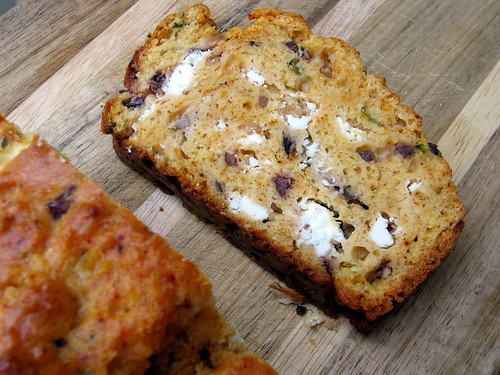
GOAT CHEESE AND OLIVE BREAD

I’m currently making my way through The Sweet Life in Paris by acclaimed pastry wizard David Lebovitz. It’s an entertaining read as far a food memoirs go, but it’d probably be ten times funnier had I actually lived in Paris. No matter. A jaunt to the City of Lights is not essential for appreciating Parisian quirks and delights.

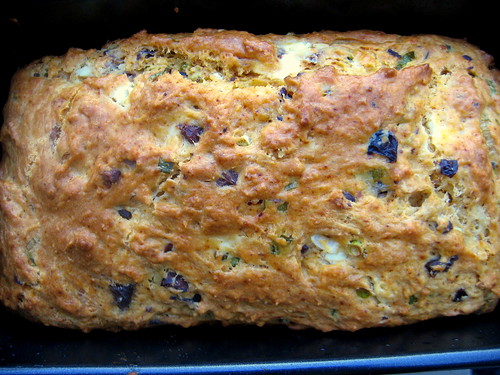
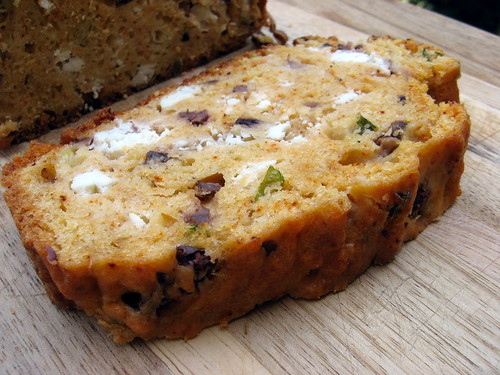
According to Mr. Lebovitz, zee French are crazy about savory quick breads. Known to locals as le cake (pronounced “kek”), they are served as an “hors d’oeuvre before dinner, thinly sliced, with glasses of cool Muscadet or a snappy Souvignon Blanc.” This Cake au Chèvre et aux Olives is appealing from top to bottom, inside and out—the edges are smoky with bacon essence, while the goat cheese and olive studded innards are rich and complex. A generous slice makes for an interesting and satisfying bite anytime of day, whether eaten before dinner as the Parisians do, or for le snack as Americans are so fond of.

  • Bacon fat (or butter) for preparing the pan
  • 1 1/2 cups flour
  • 2 teaspoons baking powder
  • 1 teaspoon chili powder
  • 1/2 teaspoon coarse salt
  • 4 large eggs, room temperature
  • 1/4 cup very fruity olive oil (I recommend Greece’s Gaea brand)
  • 1/2 cup plain whole-milk yogurt
  • 1/4 cup scallions, chopped
  • 6 oz well-crumbled goat cheese
  • 2 oz grated Parmesan
  • 1/4 cup finely chopped pitted green or black olives

Preheat oven to 350 degrees. Grease a 9-inch loaf pan with bacon grease or butter and line the bottom with a piece of parchment paper.

In a large mixing bowl, whisk together the flour, baking powder, chili powder, and salt.

GOAT CHEESE AND OLIVE BREAD

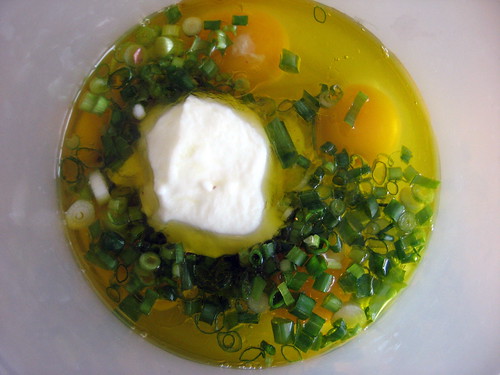
In a separate bowl, whisk together the eggs, olive oil, yogurt, and scallions until smooth.

GOAT CHEESE AND OLIVE BREAD

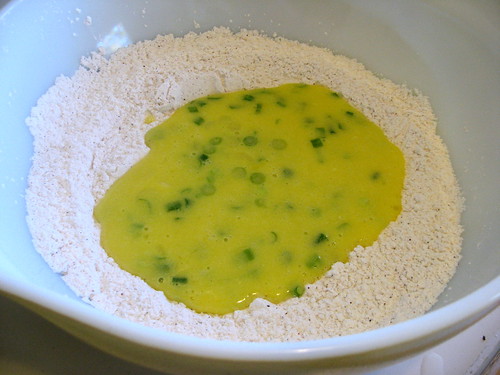
Make a well in the center of the dry ingredients and use a rubber spatula to stir in the wet mixture, stirring just until the wet ingredients are almost incorporated. (A bit of flour should still be visible.) Don’t overmix.

GOAT CHEESE AND OLIVE BREAD

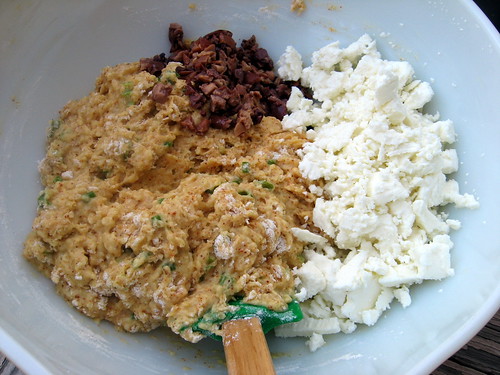
Fold in the goat cheese, Parmesan, and olives until everything is just moistened. Scrape the batter into the prepared loaf pan.

GOAT CHEESE AND OLIVE BREAD

Bake for 50 to 60 minutes, until the top is golden brown and the cake springs back when you gently touch the center. Let the cake cool for 5 minutes, then tilt it out onto a wire cooling rack. Peel off the parchment paper and let cool upright before slicing.

GOAT CHEESE AND OLIVE BREAD

[For Printable Recipe Click Here]